The Differences Between 9, 10, and 15-Digit Pet Microchips: International Standards Every Owner Should Know

A microchip is a small-sized electronic device that functions as a "permanent identification card" for pets 🐶🐱, playing a crucial role in identity verification and recovery should they ever go missing. However, many owners might find themselves puzzled by the varying number of digits in microchip codes—ranging from 9 and 10 to 15 digits.
In reality, these digit variations indicate the "radio frequency technology" and the "level of international acceptance," which directly impact the safety and cross-border mobility of your pets.
1. The 15-Digit ISO Standard Microchip (ISO 11784/11785)
🏆 The Global Standard
ISO 11784 and ISO 11785 are the universally recognized standards for pet microchips. ISO 11784 dictates a 15-digit numeric format, while ISO 11785 establishes the standard radio frequency at 134.2 kHz. Consequently, microchips adhering to this standard guarantee worldwide travel compatibility.
Technology: Operates on the 134.2 kHz frequency (FDX-B system).
Key Advantage: The 15-digit code is globally unique with no duplications. The first three digits typically represent a verifiable country code (e.g., 764 for Thailand) or a distinct manufacturer code. 🇹🇭
Acceptance: This is the sole standard universally accepted by animal quarantine stations worldwide. If you plan to travel internationally with your pet (especially to Europe, Japan, or the US), implanting an ISO-standard microchip is a mandatory legal requirement. ✈️
2. The 10-Digit Microchip System (Trovan / Avid Euro)
📜 The Classic Technology
This format was prevalent in Europe and the United States prior to the establishment of universal international standards.
Technology: Operates on 128 kHz or 125 kHz frequencies.
Limitations: As a non-ISO standard, scanners in certain regions may fail to read it. Owners may also encounter significant complications when preparing for cross-border pet relocation to countries with stringent animal import regulations. ⚠️
3. The 9-Digit Microchip System (Avid / FECAVA)
🕰️ The Legacy Technology
The 9-digit system was a pioneering technology in pet identification, developed and utilized during the early era of global microchipping. While production has been discontinued, it can still be found in pets that were microchipped in the past.
Technology: Operates on the 125 kHz frequency.
Limitations: There is a high risk that modern standard scanners will be unable to detect its signal. This can create severe obstacles if your pet goes missing or when identity verification is required in different locales. 🔍
Summary Comparison
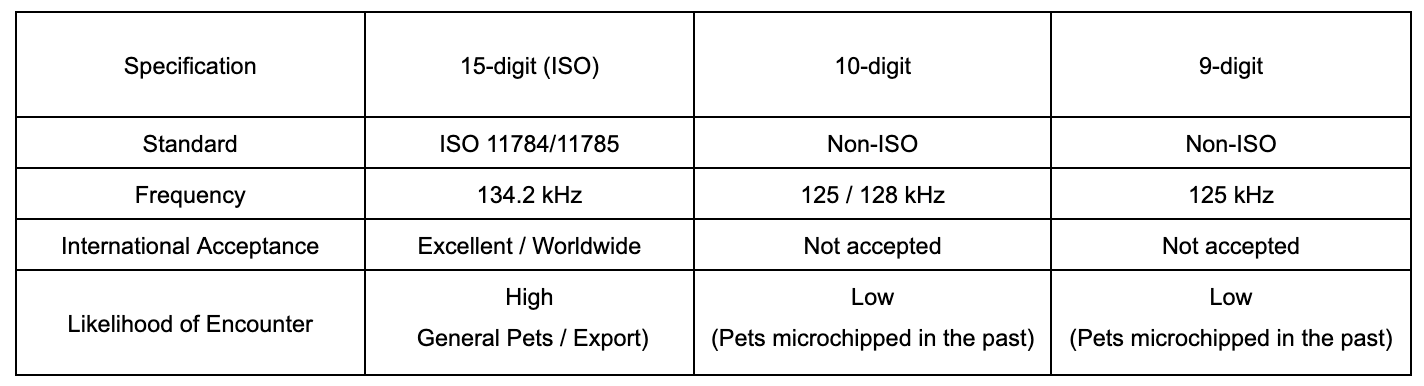
✨ Recommendations for the Safety of Your Family Members
The love and bond between you and your pet are invaluable. ❤️ To ensure this connection is never severed in the face of unforeseen circumstances, AnyVet offers the following recommendation:
Regular Verification: If your pet was microchipped a long time ago (with a 9 or 10-digit system) or if you have upcoming international travel plans, it is highly advisable to consult your veterinarian about implanting an additional 15-digit ISO-standard microchip. This ensures compliance with international regulations and prevents the distress of unreadable microchips at border checkpoints. 🩺
"Protect the pets you love today with world-class standard identification technology."
🛡️ AnyVet Microchip – Your trusted companion, offering more than just technology, to provide peace of mind for every step your beloved pets take.
👉🏻 [Click here to search for your pet's information and Sign in]