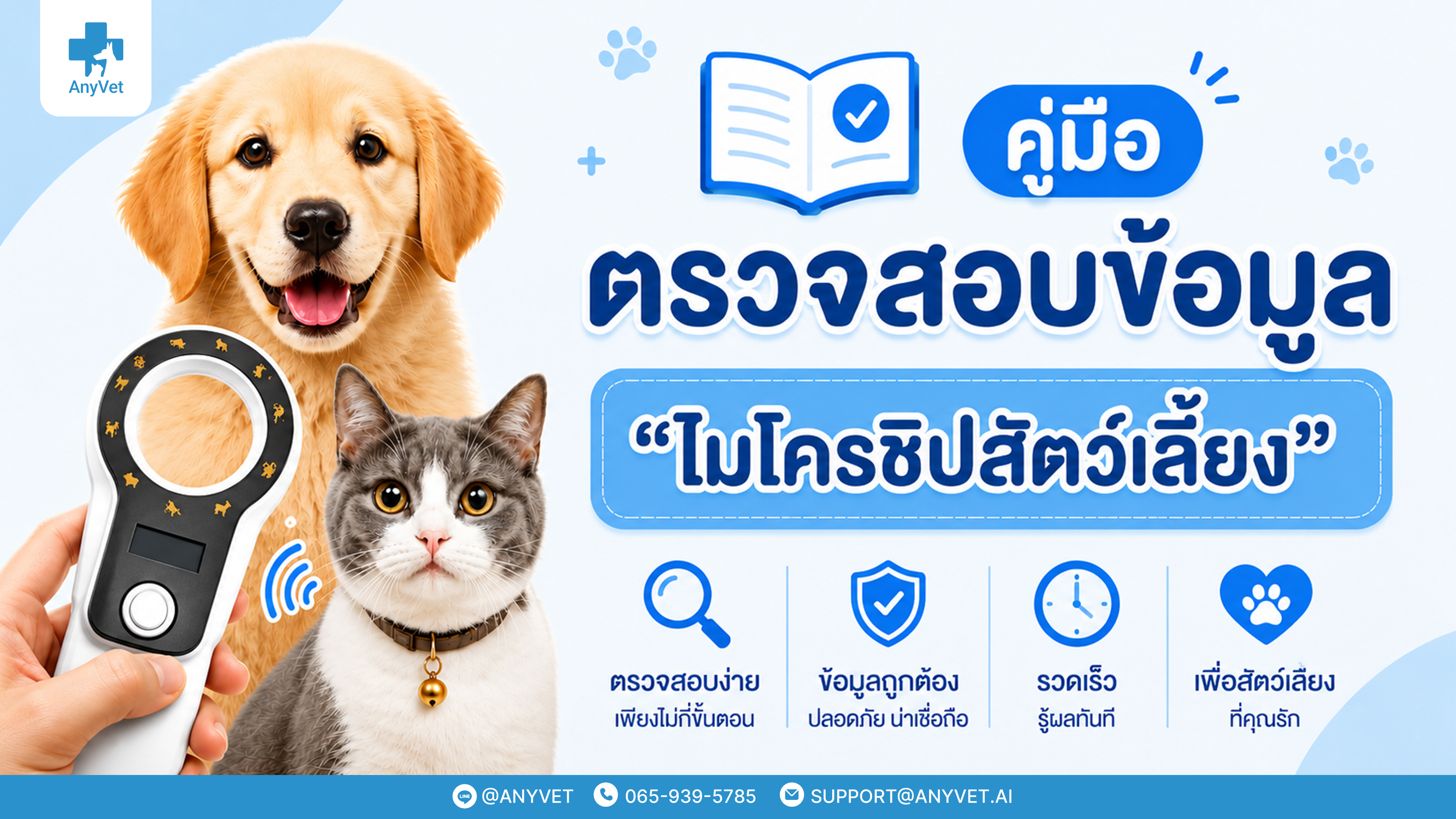
Addressing Security Concerns: Why Can't Pet Microchips Be "Hacked" or "Changed"?
.png&w=2048&q=75)
Addressing Security Concerns: Why Can't Pet Microchips Be "Hacked" or "Changed"?
For pet lovers who are deciding whether to microchip their furry friends, a deep concern often arises: "If someone takes my pet, can they sneakily scan the chip and change the number to their name?" or "Can my personal information, like my phone number and address, be hacked through the chip?"
At AnyVet Microchip, we completely understand these concerns. That is why we want to take you on a deep dive into how this tiny device actually works. We want you to be 100% confident that this "15-digit ID number" will stay with your beloved pet for life, without anyone being able to hack or modify it!
💭👨🏻💻🔢 WORM Technology: The "Un-overwritable" Memory System
International standard microchips (ISO 11784/11785) used in pets worldwide are built with high-security technology known as WORM (Write-Once, Read-Many). Just as the name suggests, data can only be written into it once. This provides extraordinary security features:
Factory-Locked Code: The 15-digit microchip number is recorded and deeply embedded into the memory during the manufacturing process.
100% Unchangeable: As soon as the code is recorded, the internal circuit permanently "locks" itself. These chips have no Reset button, no Operating System (OS), and absolutely no connectivity ports.
📌 Simply put: A microchip is like a license plate where the numbers have been "engraved" into solid steel. There is no hacker in the world who can send radio waves to overwrite or change those numbers.
🔒🐾📡 A Chip is Not a Flash Drive: No "Personal Data" is Stored Inside!
This is the most common misconception! Many owners think the microchip itself stores their name, phone number, or address, leading to fears of data theft.
The truth is: The chip contains ONLY the "15-digit number."
Identifies Identity, But Doesn't Store History: The chip acts purely as a "key code" to identify your pet. It does not have any storage space to hold personal information.
Safe Even Near Strangers: Even if someone secretly brings a scanner right up to the back of your dog or cat's neck, the only thing that will pop up on their screen is a 15-digit number. It is physically impossible to extract your personal information from the chip itself.
🔐🗄️🌐 The Secret to Security Lies in the "Database"
If the chip only holds a number, how do we know who the owner is?
The answer is that all the crucial information is securely stored in a "Central Database."
Your personal information (name, phone number, address) is kept in the cloud system of the registration provider. At AnyVet Microchip, we designed our platform by putting Data Privacy first. It is the core priority of our system development:
Searchable, But Personal Data is Hidden: If someone finds a lost pet, they can enter the 15-digit number into the AnyVet system to check the "Pet's Status." However, the system will strictly mask the owner's personal details.
Accessible Only to Verified Users: To access in-depth information and the owner's identity, one must use the official account of the Veterinary Hospital that implanted the microchip, or the securely authenticated (logged-in) account of the Pet Owner.
🏡🐾💙 The Safest Bond to Bring Your Pet Home
Implanting a microchip is the safest, most accurate, and universally accepted method to confirm ownership. You can rest assured that this 15-digit code can never be hacked, deleted, or stolen.
When you combine an international standard microchip with the rigorous and secure database of AnyVet, it creates one of the strongest invisible bonds - always ready to guide your four-legged love safely back to your arms.
Protect your data and care for your pet with world-class security standards. 💙
👉🏻 [Click here to search for your pet's information and Sign in]

Author