Does a Dog or Cat Microchip Work Like a GPS?

Does a Dog or Cat Microchip Work Like a GPS?
Debunking Myths Every Pet Lover Should Know
With many areas now campaigning for and enforcing mandatory pet registration laws, the most common question pet owners ask is: "If I microchip my dog or cat, can I track their location on my phone like a GPS?"
The short and clear answer is: "No." A microchip is not a GPS and cannot transmit real-time location signals.
But wait! Don't think microchips aren't important. In reality, this is the only permanent way to verify your furry friend's identity for their entire life. This article will help you understand the differences between these devices and debunk common myths line by line!
🐾💉 What is a Pet Microchip?
A microchip is a tiny electronic device (about the size of a grain of rice) that a veterinarian implants under the skin at the back of your pet's neck.
Internal Structure: Inside the chip, there is no battery and no satellite receiver. It contains only a "15-digit ID number."
How it Works: It is a battery-free device (Passive RFID). It will not activate or emit any signals until a "microchip scanner" is placed very close to it.
Global Standards: A safe microchip must comply with ICAR and ISO 11784 / 11785 standards so that scanners worldwide can accurately read the data.
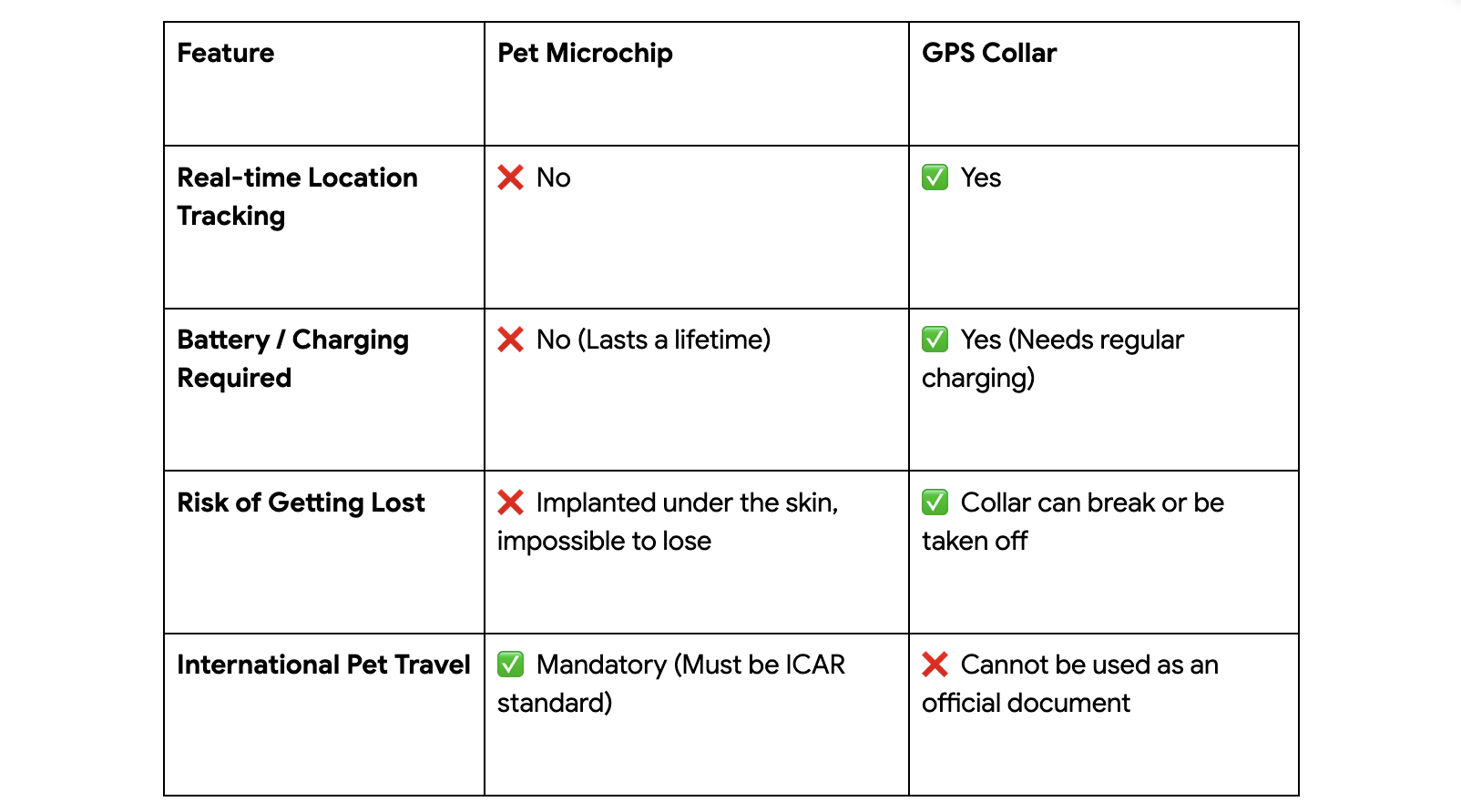
📌 Simply put: A microchip is like an "internal ID card" for your pet, not a tracking device.
🐶📿 What is a GPS Tracker Collar?
GPS is a satellite-based location tracking technology. These devices require a "battery" and a "SIM card" (or signal transmitter) to send location data directly to a mobile app on your phone.
📌 Simply put: A GPS is a "tracking device" that lets you see coordinates at any time, but it has drawbacks: it needs to be charged regularly, and the collar can fall off.
✨ Clear Comparison: Microchip vs. GPS Tracker
🤔💭 Q&A: 4 Common Microchip Myths Debunked
❌ Myth: Once implanted, I can open my phone and track their location immediately.
✅ Truth: Not true. Microchips cannot transmit satellite coordinates on their own.❌ Myth: Microchips have batteries that will eventually expire.
✅ Truth: Not true. Microchips use a passive system (no battery), so they function for the pet's entire lifespan.❌ Myth: You can scan a microchip from far away.
✅ Truth: Not true. Reading the data requires a specialized scanner held very close to the exact implant site.❌ Myth: Just having the vet implant the chip is enough.
✅ Truth: Incorrect! If the 15-digit number isn't registered and linked to the owner's information in a database, anyone who scans the lost pet will have no idea who it belongs to.
✨ Why is the "Database System" More Important Than the Chip?
As we now know, a microchip only holds a "15-digit number" and has no GPS. Therefore, the only thing that will help bring your pet home is the "Database System."
When a veterinarian implants an ICAR-standard microchip in your pet, the animal hospital records that data directly into the central system of AnyVet Microchip. Having a strong backend system provides crucial benefits:
Global-Level Security: Our system is certified with the ISO 27001 information security standard. Your personal data is kept strictly confidential with zero leaks.
Check it Yourself: Pet owners can log into the system to verify the accuracy of their information or view their pet's microchip search history at any time.
Scan & Know Instantly: If a lost pet is found and brought to a clinic, veterinarians can scan the number, search the system, and contact you quickly.
✨ The Best Choice for Your Furry Friend's Safety
If you want the ultimate protection for your four-legged family member, the safest and most thorough approach is to use both technologies together:
1.Wear a GPS Collar: To track their immediate coordinates the moment you realize they have escaped.
2.Implant a Microchip (Data entered by Vets): To serve as a permanent backup (Plan B). If the GPS battery dies or the collar falls off, anyone who finds your pet can still scan them and find you.
Protect your pet today with an ICAR-standard microchip and a globally secure database system from AnyVet Microchip.
[Click here to search for your pet's information and Sign in]

Author