How to Choose Breed-Specific Pet Food? And How Microchips Impact Long-Term Pet Health

Modern pet care has evolved beyond just providing tasty meals or keeping up with vaccinations. Attentive owners are now looking deeper into "Breed-Specific Nutrition" and "Long-Term Health Data." These two elements are more connected than many realize especially when a Pet Microchip is integrated into a comprehensive healthcare ecosystem.
1. Why Does "Breed" Determine Food Choice?
Every pet breed has been developed for different purposes, which directly affects their Metabolism and unique health predispositions:
Bone & Joint Structure: Large breeds require nutrients that manage growth rates to prevent hip and elbow dysplasia.
Facial & Dental Anatomy: Brachycephalic (flat-faced) breeds like Pugs or Persian cats need kibble shapes that are easy to pick up and chew.
Energy Levels: Working dogs require significantly higher protein and fat content compared to low-activity companion breeds.
2. Selecting Food by Size (Size Matters)
🐶 For Small Breeds
Needs: High metabolism; they require more energy per pound of body weight than large breeds.
Formulation: Small-sized kibble is essential. High antioxidant levels are recommended to support their long-term health, as small breeds often have longer lifespans.
🐶 For Large Breeds
Needs: Calorie control is vital to prevent excess weight from putting pressure on developing joints.
Formulation: Look for ingredients like Glucosamine and Chondroitin for joint support, along with balanced Calcium and Phosphorus levels.
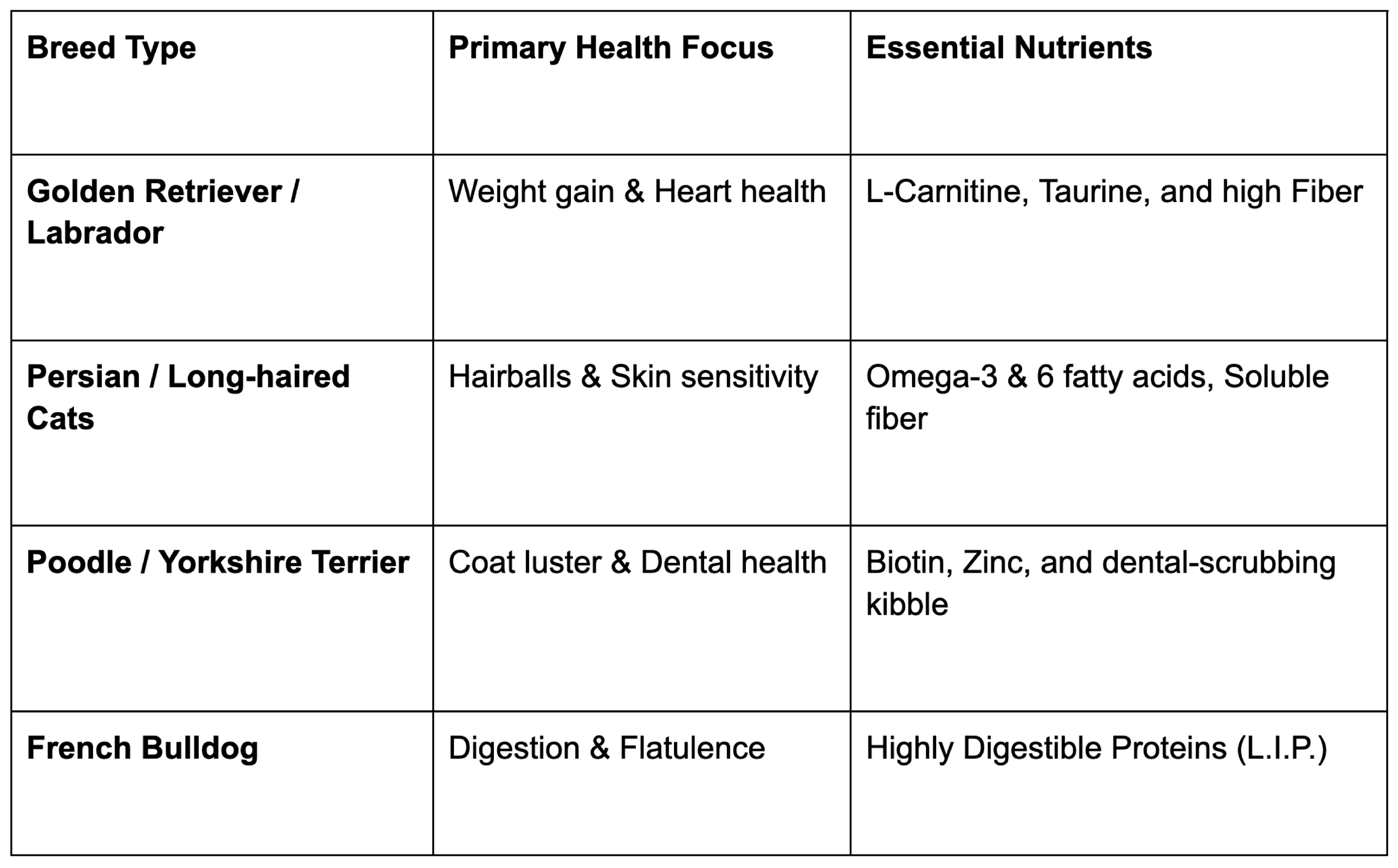
3. Breed-Specific Nutritional Requirements
4. Checklist: How to Pick the "Perfect" Pet Food
Read the Label: Look for the term "Complete and Balanced." Ensure the protein source is real meat, not low-quality by-products.
Life Stage Matters: A puppy/kitten has vastly different nutritional requirements than an adult or senior pet, even within the same breed.
Consult Your Vet: If your pet has underlying conditions or allergies, a Prescription Diet may be necessary.
How is a Microchip Related to Pet Nutrition?
While many view microchips solely as a tool for recovery, they actually serve as a Digital Health ID linked to vital information, such as:
Breed & Age
Vaccination History
Medical Conditions & Allergies
Weight Trends & Owner Contact Info
When veterinarians can easily access this data via a microchip, they can provide more precise nutritional recommendations tailored to the pet’s specific health profile.
Real-World Benefits of Microchips in Nutrition:
Personalized Meal Planning: If a Labrador's data shows a tendency toward weight gain, the system can prompt a switch to a weight-management formula.
Allergy Risk Mitigation: Recorded histories of protein allergies help clinics recommend safer food alternatives instantly.
Continuity of Care: Even if you change clinics, the core health data remains accessible, reducing the risk of improper dietary choices due to incomplete records.
Conclusion: Microchips + Nutrition = The Pet Health Ecosystem
The future of pet care is an interconnected system. A microchip is no longer just a "tracker"; it is the foundation of an integrated health system—from identity and medical treatment to Precision Nutrition.
Choosing the right food for a specific breed isn't just marketing—it’s about providing the exact nutrients your pet needs to thrive. The result is a shinier coat, boundless energy, and a longer, healthier life together.
💡 Pro Tip: Always measure food portions according to the weight guide on the packaging. Remember, "overfeeding" out of love is often the biggest enemy of pet health!
🌐 Microchip Verification & Inquiries:
www.anyvetmicrochip.com
✨ Pet safety begins with attention to detail.
👉🏻[Click here to search for your pet’s information and log in]

Author