BARF Diet for Dogs & Microchip: The Ultimate Guide to Canine Health and Safety

In recent years, two major trends have dominated the modern pet care space: the BARF (Biologically Appropriate Raw Food) diet and pet microchip
The raw feeding movement, popularized by Australian veterinarian Ian Billinghurst, operates on the philosophy that domestic dogs thrive best on a diet mirroring what their wild ancestors ate. However, raising a dog in today’s urban environment requires more than just dietary adjustments it demands robust safety measures.
Is a raw diet truly beneficial for your dog? And how does microchip technology fit into a comprehensive pet care routine? Let's explore.
What is the BARF Diet? Behind the Trend
BARF stands for Biologically Appropriate Raw Food (or Bones and Raw Food). It focuses on feeding dogs raw, uncooked ingredients to simulate the natural diet of wild canines (like wolves).
A standard BARF meal typically consists of:
Raw muscle meat: 60–70%
Raw meaty bones (soft bones)
Organ meats (liver, kidneys, etc.)
Pureed vegetables and fruits
Why Pet Owners Choose BARF:
Radiant Coat and Skin: Many owners report a shinier coat and a dramatic reduction in skin allergies.
Reduced Odors: Less breath and body odor due to the absence of artificial fillers and preservatives.
Lean Muscle Mass: High-quality, unaltered protein supports excellent muscle development.
Smaller, Less Smelly Stools: The dog's digestive system absorbs almost all the nutrients, resulting in minimal waste.
Benefits of the BARF Diet
Biologically Accurate: Aligns perfectly with a dog’s natural digestive anatomy.
Improves Dental Health: Chewing on raw, soft bones naturally scrapes away plaque and tartar buildup.
Ingredient Transparency: Because you prepare the food, you know exactly what your dog is consuming, free from chemical additives.
The Hidden Risks of Going Raw
While the benefits sound promising, handling raw meat comes with significant health risks if proper hygiene isn't maintained.
Dangerous Pathogens: Raw meat is a breeding ground for bacteria like Salmonella, E. coli, and Listeria. These pathogens can cause severe gastrointestinal illness or sepsis in dogs. More importantly, they can spread to humans through saliva, licking, or handling contaminated food bowls.
Parasites and Protozoa: Raw meat that hasn't been deep-frozen at ultra-low temperatures may contain dormant parasite larvae, which can infect your dog's intestinal tract.
Nutritional Imbalances: DIY raw feeding without expert formulation often leads to severe calcium deficiencies or excessive phosphorus, causing long-term bone and kidney damage.
Choking and Internal Injuries: Even though raw bones are softer than cooked ones, they can still splinter, leading to choked airways, chipped teeth, or perforated stomach linings.
💡 Elevating Safety with Pet Microchipping
While a raw diet focuses on internal health, protecting your dog from external threats is equally crucial. Today, canine microchipping is recognized by veterinarians worldwide as the gold standard for pet safety and identification.
What is a Dog Microchip?
A microchip is a tiny electronic chip—roughly the size of a grain of rice—that contains a unique, unalterable identification number. A veterinarian implants it just beneath the loose skin between your dog’s shoulder blades using a specialized hypodermic needle. The procedure takes only a few seconds, causes minimal discomfort (similar to a routine vaccine shot), and requires no anesthesia.
Key Benefits of Microchipping:
Permanent Proof of Ownership: Unlike collars or tags that can fall off, get lost, or be removed, a microchip provides irrefutable, permanent proof that the dog belongs to you.
High Recovery Rates for Lost Dogs: Veterinary clinics, animal hospitals, and shelters across the globe are equipped with microchip scanners. If a lost dog is brought in, scanning the chip reveals your contact details instantly.
Mandatory International Travel: If you plan to travel abroad with your dog, most countries (including the EU, Japan, and the US) legally require a microchip and a corresponding health certificate before entry.
Streamlined Medical Records: Modern veterinary systems are starting to link microchip IDs directly to digital medical histories, making it easier to track vaccinations, allergies, and dietary needs (such as a BARF regimen).
Is BARF and Microchipping Right for Your Dog?
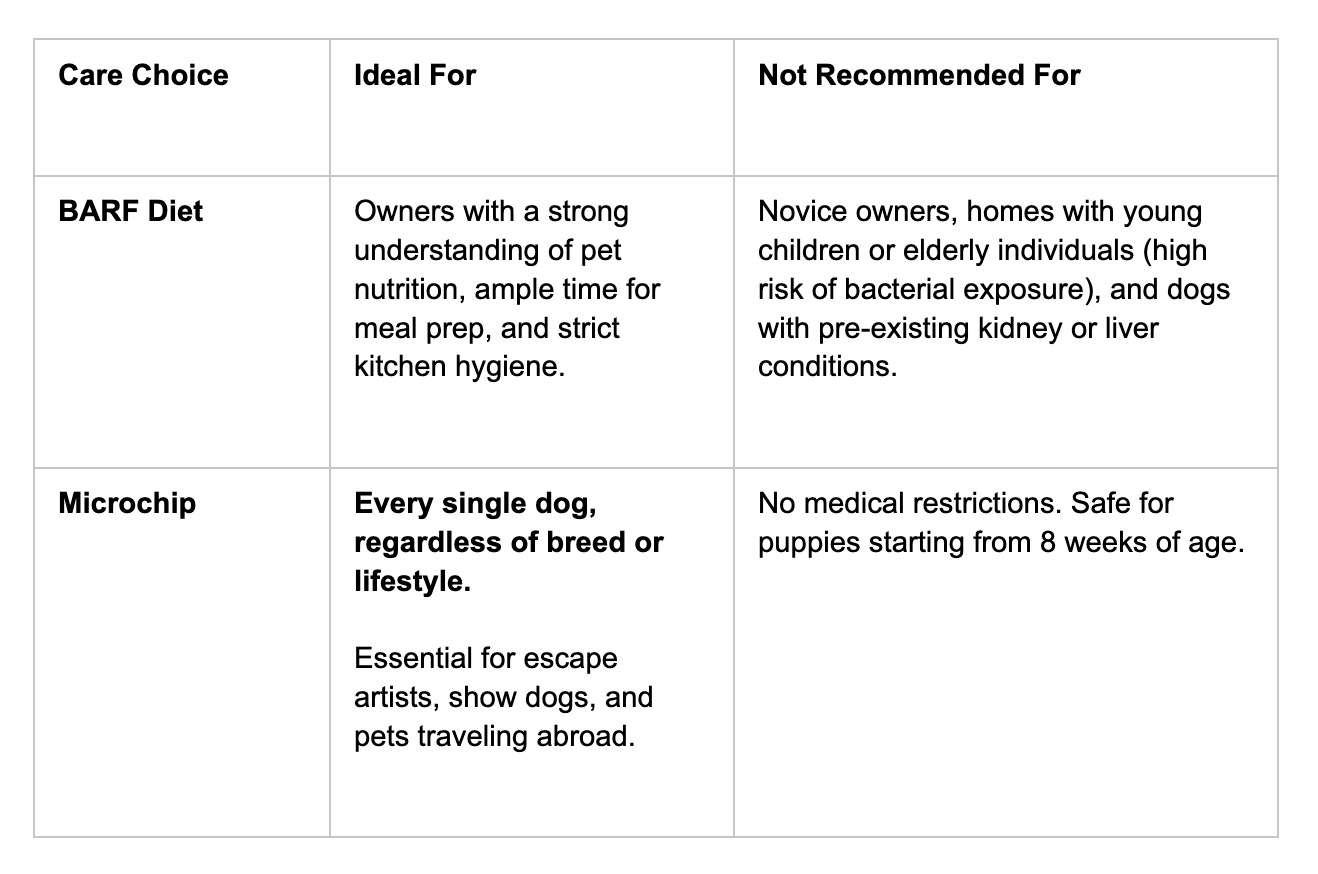
Best Practices for a Happy, Healthy Dog
Consult Your Vet First: Before switching to a BARF diet or scheduling a microchip implantation, have your vet evaluate your dog’s overall health.
Practice Strict Hygiene: If feeding raw, use separate cutting boards, deep-freeze meat before preparation, and wash your hands thoroughly.
Keep Microchip Data Updated: A microchip is only effective if your contact information is correct. Remember to update your registry file whenever you change your phone number or move to a new address.
Conclusion
Optimal dog care requires a balance of proper nutrition and proactive safety. Choosing a BARF diet isn't inherently wrong, but it demands strict accountability regarding food safety and nutritional balance. On the other hand, microchipping is a simple, set-and-forget safety net ensuring that if your beloved companion ever goes missing, they have the best possible chance of finding their way back to you.
FAQ (Frequently Asked Questions)
Q: Is the BARF diet completely safe?
A: It can be safe if formulated correctly and handled hygienically, but it carries a inherently higher risk of bacterial contamination than cooked or commercial diets.
Q: Does a microchip hurt the dog, and does it cause cancer?
A: The implantation feels like a standard vaccine pinch. The chip is encased in biocompatible glass designed to stay safely in the body for life without causing adverse reactions or illness.
Q: Does a pet microchip track my dog via GPS?
A: No. Microchips use Radio Frequency Identification (RFID) and do not contain batteries or GPS tracking. They must be read up close with a scanner. For real-time tracking, you should pair the microchip with a GPS collar attachment.
Q: At what age can puppies start BARF and get microchipped?
A: Raw diets are generally not recommended for growing puppies unless strictly supervised by a veterinary nutritionist. Microchipping, however, can be safely done as early as 8 weeks old, often during their first round of puppy shots.
🌐 Microchip Verification & Inquiries:
www.anyvetmicrochip.com
✨ Pet safety begins with attention to detail.
👉🏻[Click here to search for your pet’s information and log in]

ရေးသားသူ